

What Causes My AC to Leak Water? (And How to Fix It)
You walk past your air conditioner and notice a puddle on the floor. Water is dripping from the indoor unit, staining the wall, or soaking through the ceiling. It’s alarming, but it’s also one of the most common HVAC problems homeowners face.
So, what causes your AC to leak water? The answer can range from a simple clogged drain line to a more serious system failure. Either way, an AC water leak should never be ignored. Left untreated, even a slow drip can cause mold growth, drywall damage, and costly structural repairs.
The good news: most leaks can be diagnosed early and fixed before they spiral into expensive problems.
In this guide, we’ll break down every major cause of AC water leaks, what to do when your AC is leaking water, how to handle water leaking from a wall air conditioner, and what a condenser leak in an air conditioner actually means.
How Does an Air Conditioner Produce Water?
Before diving into causes, it helps to understand the source of the water.
Your air conditioner does two jobs: it cools your home and removes moisture from the air. As warm, humid air passes over the cold evaporator coil, condensation forms in the same way a cold glass of water “sweats” on a hot day. That condensation drips into a drain pan and flows out of your home through a condensate drain line.
According to the U.S. Department of Energy, heating and cooling account for roughly 43% of a home’s utility bill, making your HVAC system one of the most critical and costly systems to maintain. When any part of this drainage process breaks down, water starts leaking where it shouldn’t.
7 Common Reasons Your AC Is Leaking Water
1. Clogged Condensate Drain Line
This is the single most common cause of AC water leaks.
Over time, algae, mold, dirt, and debris accumulate inside the drain line. Eventually, that buildup creates a blockage that prevents water from flowing out properly. Water backs up into the drain pan and overflows, straight into your home.
Signs of a clogged drain line:
- Standing water around the indoor unit
- Musty or moldy odors near vents
- Higher than normal indoor humidity
- Visible algae or slime near the drain pipe exit
How to fix it: A wet/dry vacuum can sometimes clear minor clogs from the outside drain opening. For stubborn blockages, professional cleaning is the safest option. Routine maintenance with a diluted bleach flush (1 cup of bleach per gallon of water, poured into the drain access port) can prevent most clogs from forming in the first place.
2. Dirty Air Filters
A dirty air filter is one of the most underestimated causes of AC problems, including water leaks.
When a clogged filter restricts airflow, the evaporator coil gets too cold and begins to freeze. Once the system shuts off and the ice melts, the volume of water overwhelms the drain pan and causes overflow.
The Department of Energy reports that replacing a dirty air filter can reduce air conditioner energy consumption by up to 15%, while also preventing system damage.
Warning signs:
- Noticeably weak airflow from vents
- Ice visible on refrigerant lines or the indoor unit
- Rising energy bills without increased usage
- Water is leaking after the system shuts off (ice melt)
How to fix it: Check your filter every 30 days during peak cooling season. ENERGY STAR recommends replacing filters at least every 90 days, more often in dusty homes or homes with pets.
3. Frozen Evaporator Coil
A frozen evaporator coil is closely related to the dirty filter problem, but it has several other causes worth knowing.
When the coil freezes, ice builds up on the indoor unit. Once the system cycles off, that ice melts rapidly, releasing far more water than the drain pan can handle.
Common causes of a frozen coil:
- Dirty air filters (see above)
- Blocked or closed supply vents
- Low refrigerant levels
- Dirty evaporator coil itself
Signs your coil is frozen:
- Ice buildup on indoor components or refrigerant lines
- Warm air is blowing from the vents despite the system running
- Reduced cooling performance
- Water is pooling around the air handler
How to fix it: Turn the system off and switch the fan to “ON” mode to speed up thawing, typically 1 to 3 hours. Do not run the AC until the coil is fully thawed. Once thawed, identify and correct the underlying cause. If refrigerant is involved, a licensed technician is required.
4. Low Refrigerant Levels
Low refrigerant doesn’t directly produce water, but it sets off a chain reaction that does.
When refrigerant levels drop, pressure inside the evaporator coil falls below normal. This causes coil temperatures to drop well below freezing, resulting in ice formation. When that ice melts, the excess water overflows the drain system.
Common symptoms of low refrigerant:
- Hissing or bubbling sounds from the unit
- Longer-than-normal cooling cycles
- Warm air coming from supply vents
- Significantly higher electricity bills
- Frozen coils (see above)
How to fix it: Refrigerant work must be handled by a licensed HVAC technician; it’s required by federal law. Simply topping off the refrigerant without finding and repairing the leak is only a temporary fix. The leak itself must be located and sealed.
5. Damaged or Rusted Drain Pan
If your AC system is more than 10 years old, the metal drain pan may have developed rust, cracks, or corrosion, any of which allow water to escape before it ever reaches the drain line.
Even a hairline crack can release a steady drip that, over weeks and months, causes serious water damage to ceilings, drywall, and insulation.
How to fix it: A licensed HVAC technician can inspect the drain pan and determine whether it can be sealed with waterproof epoxy or needs full replacement. This is not a repair to delay; a failed drain pan that goes unaddressed commonly leads to mold growth and structural damage.
6. Broken Condensate Pump
Many homes, particularly those with AC systems located in basements, attics, or utility rooms below grade, rely on a condensate pump to push water away from the unit and out of the home.
If that pump fails due to a burned-out motor, clogged float switch, or power issue, water has nowhere to go and begins pooling around the unit.
Signs of a failing condensate pump:
- Water is pooling directly beneath the air handler
- System shutting off unexpectedly (safety float switch triggered)
- Gurgling sounds from the pump area
How to fix it: A technician can test the pump, replace the float switch, or install a new pump if needed. This is a straightforward repair with a relatively low cost.
7. Improper AC Installation
A less obvious but surprisingly common cause, especially in systems that have leaked since day one.
If the indoor unit isn’t perfectly level, water may flow away from the drain opening rather than toward it. Improperly pitched or connected drain lines can also cause standing water or backflow.
Signs of an installation problem:
- Leaks appeared shortly after installation
- Frequent, recurring drainage issues with no clear cause
- Persistent moisture or water stains that return after cleaning
How to fix it: An HVAC professional should inspect the system’s installation, leveling, and drain line configuration. In many cases, these issues can be corrected without major expense if caught early.
Water Leaking From Wall Air Conditioner: Causes and Fixes
If you have a window or wall-mounted AC unit with water leaking inside, the cause is usually simpler than a central system leak, but it still needs attention.
These units are designed to drain condensation to the outside. When that drainage is disrupted, water flows inward instead of out.
Common reasons for water leaking from a wall air conditioner:
- Dirty air filter restricting airflow and causing the coil to freeze
- Blocked drainage channels inside the unit (common in units that haven’t been cleaned)
- Improper tilt angle — the unit should angle slightly toward the outside; if it tilts inward, water follows gravity the wrong way
- Frozen evaporator coil caused by low refrigerant or poor airflow
- Excessive outdoor humidity is overwhelming the unit’s drainage capacity
How to fix water leaking from a wall air conditioner:
- Turn off the unit.
- Check that it tilts slightly outward (typically 1/2 inch lower at the back than the front).
- Remove and clean the air filter.
- Clear any visible debris from the drainage channels using a soft brush or compressed air.
- If the unit was frozen, allow it to thaw completely before restarting.
If water leaking from your wall air conditioner continues after these steps, a professional inspection is recommended; there may be a refrigerant or coil issue at the root.
Condenser Leak Air Conditioner: What’s Normal and What’s Not
Many homeowners notice water near the outdoor condenser unit and assume there’s a serious condenser leak. Here’s how to tell the difference between normal and problematic.
Normal water near the outdoor unit:
- A small puddle forming directly beneath the condenser on hot, humid days is typically just condensation from the coil; this is normal operation.
- Water from a nearby rain event or sprinkler system is obviously not a system issue.
Signs of a real condenser leak in an air conditioner:
- Ice buildup on the refrigerant lines or coil
- Excessive water that doesn’t match the weather conditions
- Declining cooling performance alongside the water
- Hissing sounds near the unit (indicates refrigerant leak, which causes ice/melt cycles)
- Water pooling near the condenser that traces back to a frozen indoor coil melting out
In most true condenser leak situations, the problem is refrigerant-related; low refrigerant causes freezing, and when the system cycles off, the ice melts and creates a larger-than-normal water presence. This requires a licensed technician to diagnose and repair.
If you’re unsure whether the water near your outdoor unit is normal, it’s worth a professional evaluation, especially if your system’s cooling performance has dropped.
What To Do When AC Is Leaking Water: Step-by-Step
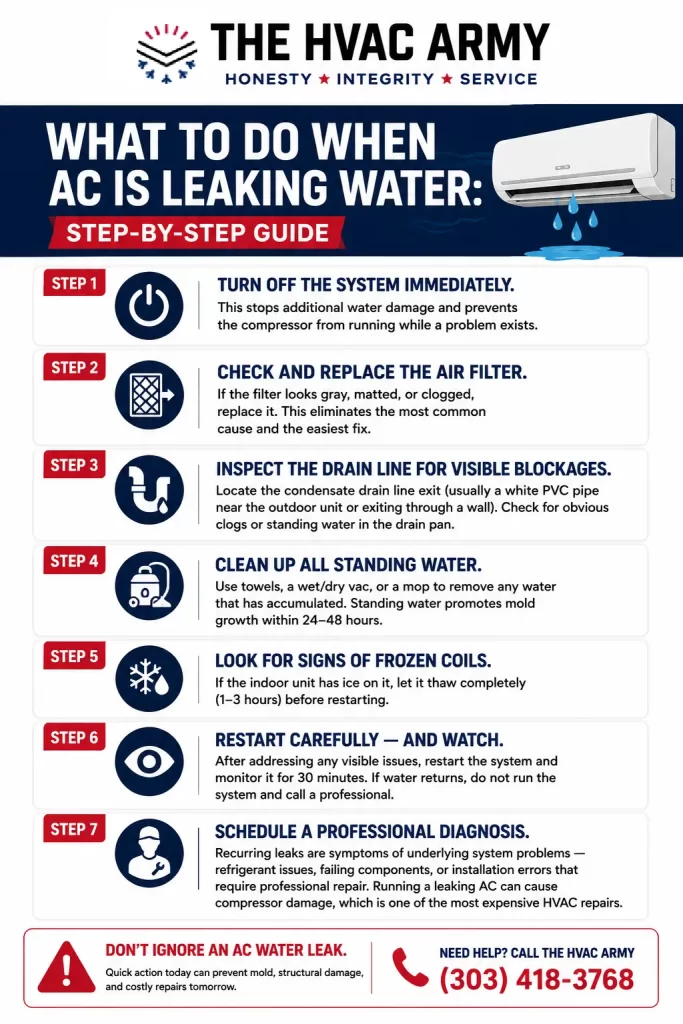
If your AC is actively leaking water right now, here’s exactly what to do:
Step 1: Turn off the system immediately. This stops additional water damage and prevents the compressor from running while a problem exists.
Step 2: Check and replace the air filter. If the filter looks gray, matted, or clogged, replace it. This eliminates the most common cause and the easiest fix.
Step 3: Inspect the drain line for visible blockages. Locate the condensate drain line exit (usually a white PVC pipe near the outdoor unit or exiting through a wall). Check for obvious clogs or standing water in the drain pan.
Step 4: Clean up all standing water. Use towels, a wet/dry vac, or a mop to remove any water that has accumulated. Standing water promotes mold growth within 24–48 hours.
Step 5: Look for signs of frozen coils. If the indoor unit has ice on it, let it thaw completely (1–3 hours) before restarting.
Step 6: Restart carefully — and watch. After addressing any visible issues, restart the system and monitor it for 30 minutes. If water returns, do not run the system and call a professional.
Step 7: Schedule a professional diagnosis. Recurring leaks are symptoms of underlying system problems — refrigerant issues, failing components, or installation errors that require professional repair. Running a leaking AC can cause compressor damage, which is one of the most expensive HVAC repairs.
How Much Damage Can an AC Water Leak Cause?
Many homeowners treat AC leaks as a minor nuisance. In reality, even a slow drip — left unaddressed — can cause:
- Drywall damage and ceiling stains that require full panel replacement
- Mold and mildew growth within 24–48 hours of moisture exposure
- Wood rot in framing, subfloor, and structural elements
- Insulation saturation that reduces energy efficiency and harbors bacteria
- Electrical hazards if water reaches wiring or circuit panels
- Compressor damage from running the system while frozen or improperly drained
HVAC maintenance studies consistently show that neglected systems experience significantly more frequent breakdowns and consume more energy than well-maintained ones. The cost of a drain cleaning or filter change is a fraction of what mold remediation or drywall replacement costs.
How to Prevent AC Water Leaks
The best cure is prevention. Here’s what proactive homeowners do to keep their systems leak-free:
Change air filters every 30–90 days. Set a phone reminder. This single habit prevents the majority of coil freeze and drainage problems.
Schedule annual professional maintenance. A pre-season tune-up includes drain line cleaning, coil inspection, refrigerant check, and airflow verification, catching developing problems before they become leaks.
Flush the condensate drain line seasonally. Pour a cup of diluted bleach (or white vinegar) into the drain access port at the start of each cooling season to prevent algae buildup.
Keep vents open and unobstructed. Blocked supply or return vents restrict airflow and contribute to coil freezing.
Monitor for early warning signs:
- Musty odors from vents
- Water stains on ceilings or walls near the air handler
- Reduced airflow or longer cooling cycles
- Unexplained spikes in your energy bill
These warning signs often appear weeks before a visible leak develops, giving you time to intervene inexpensively.
Frequently Asked Questions
Why is my AC leaking water inside the house? The most common causes are a clogged condensate drain line, a frozen evaporator coil from a dirty filter or low refrigerant, or a cracked/rusted drain pan. Start by checking and replacing the air filter, then inspect the drain line for blockages.
Is it safe to run my AC if it’s leaking water? No. Running an AC that’s actively leaking water risks compressor damage, worsens the underlying problem, and accelerates water damage to your home. Turn it off and address the cause before restarting.
What causes my AC to leak water only when it rains? If water leaks only during or after rain, the issue is likely with the condensate drain line’s outdoor exit point becoming flooded or blocked by debris — not an internal system failure. Check the drain exit location for obstructions.
How much does it cost to fix an AC water leak? Costs vary widely by cause. A drain line cleaning typically runs $75–$250. A refrigerant recharge can cost $200–$600, depending on the refrigerant type. Drain pan replacement runs $100–$350. A condensate pump replacement is usually $100–$250 for parts and labor.
Can a clogged AC drain line cause water damage? Yes, and it’s one of the most common sources of hidden home water damage. A backed-up drain line can overflow for days or weeks before a homeowner notices, saturating insulation, drywall, and framing in the process.
Professional AC Repair in Denver and Aurora
If your air conditioner is leaking water, the sooner it’s addressed, the lower the repair cost — and the less damage to your home.
Whether you’re dealing with a clogged condensate drain, a frozen evaporator coil, a condenser leak, or water leaking from a wall air conditioner, professional diagnosis is the most reliable way to identify the root cause and restore proper operation.
Our team provides expert AC Repair in Denver and Aurora for all major makes and models. We don’t apply temporary fixes — we find and resolve the underlying cause so the leak doesn’t return.
Schedule an AC Tune-Up Denver and Aurora Homeowners Trust
Most AC water leaks are entirely preventable with routine service. A professional AC Tune-Up in Denver and Aurora includes drain line cleaning, evaporator coil inspection, refrigerant level verification, airflow analysis, and filter evaluation, the full picture of what keeps your system running efficiently and leak-free.
Contact us today to get a free quote and protect your home before a small drip becomes a costly repair.
Summary: What Causes My AC to Leak Water?
To recap the seven most common causes:
- Clogged condensate drain line — the #1 cause
- Dirty air filter — restricts airflow, freezes the coil
- Frozen evaporator coil — from poor airflow or low refrigerant
- Low refrigerant levels — drops coil pressure below freezing
- Damaged or rusted drain pan — common in systems over 10 years old
- Broken condensate pump — failure to remove water from the system
- Improper installation — poor leveling or drain line pitch
In most cases, catching the problem early means a simple, low-cost fix. Ignoring it means water damage, mold, and potentially major HVAC component failure. When in doubt, call a licensed technician; the diagnostic cost is always worth it.
FAQs
How long can I run my AC if it’s leaking water?
You shouldn’t run it at all once you notice a leak. Even a short period of continued operation can worsen the underlying problem; a frozen coil can cause the compressor to work harder than it should, and a backed-up drain pan can overflow further into walls or ceilings. Turn the system off, identify the cause, and restart only after the issue is resolved.
Why does my AC leak more water in summer than at other times of year?
Hot, humid summer air contains significantly more moisture, which means your AC pulls more water out of the air during peak season. This puts extra demand on the drain system, so a partially clogged drain line that managed fine in spring may overflow completely by July. If leaks seem seasonal, a pre-summer drain flush and filter change usually solves it.
Does homeowners’ insurance cover damage from an AC water leak?
It depends on the cause and how quickly you acted. Most standard policies cover sudden, accidental water damage, for example, if a condensate pump fails without warning. However, insurers typically deny claims for damage resulting from a slow leak that was neglected over time, classifying it as a maintenance issue. Document the leak immediately, act quickly, and contact your insurer to understand your specific coverage.
Why is my AC only leaking water at night?
Nighttime leaks often point to a temperature-related issue. When outdoor temperatures drop in the evening, an AC system running with low refrigerant or restricted airflow is more prone to coil freezing. The ice then melts overnight or in the early morning hours, causing water to appear even though the system may have been off for hours. If you consistently find water in the morning, refrigerant level and airflow should be the first things checked.
Can an AC water leak cause mold in my home?
Yes, and faster than most homeowners expect. Mold can begin growing on wet drywall, insulation, or wood within 24 to 48 hours of moisture exposure. AC leaks are particularly problematic because they often occur inside walls, above ceilings, or in utility closets where moisture goes undetected for days or weeks. If a leak has been present for more than a day or two, it’s worth having the affected area inspected for mold in addition to repairing the AC itself.
