

Hail Damage Air Conditioner Repair vs Replacement: Which Makes More Sense?
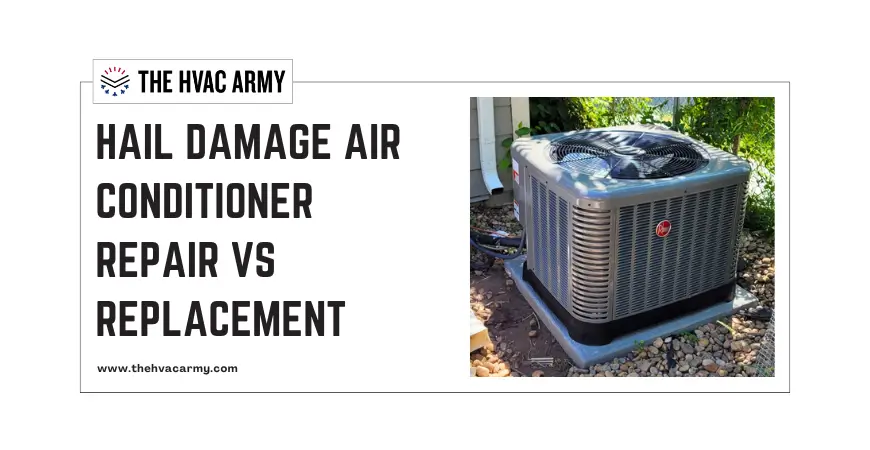
Colorado homeowners know hail season is not a matter of “if.” It is a matter of “when.” Every year, severe thunderstorms move across the Denver Metro area, bringing large hail, damaging winds, and expensive property damage. While roofs and vehicles usually get the most attention after a storm, many homeowners overlook another major target sitting outside their home: the air conditioner condenser unit.
A single hailstorm can leave dents, bent fins, damaged coils, electrical problems, and reduced cooling performance behind. In some cases, the damage is cosmetic. In others, the system may slowly lose efficiency, develop refrigerant leaks, or fail completely weeks later.
That raises an important question: Should you repair the system or replace it entirely after hail damage?
The answer depends on several factors, including the age of the system, the severity of the damage, repair costs, insurance coverage, and long-term efficiency concerns.
At The HVAC Army, we help homeowners across Aurora and the Metro Denver area make informed HVAC decisions without pressure tactics or unnecessary upselling. This guide explains exactly how hail damage affects air conditioners, when repairs make sense, and when replacement is the smarter investment.
Why Hail Damage to Air Conditioners Is So Common in Colorado
Colorado consistently ranks among the most hail-prone states in America. According to the National Oceanic and Atmospheric Administration (NOAA), Colorado experiences thousands of severe hail reports annually, with the Front Range frequently seeing storms that produce hail larger than one inch in diameter. Some storms generate baseball-sized hail capable of causing catastrophic exterior damage. Outdoor AC condenser units are especially vulnerable because they are exposed year-round.
Most residential systems rely on thin aluminum fins and delicate copper tubing to transfer heat. Even moderate hail can damage these components.
Common causes of hail damage to air conditioners include:
- Direct impact from hailstones
- Flying debris during storms
- Restricted airflow from bent condenser fins
- Coil punctures are causing refrigerant leaks
- Electrical damage from moisture intrusion
- Vibration and structural stress after impact
Many homeowners assume the unit is fine because it still turns on after the storm. Unfortunately, hail damage is not always immediately visible — sometimes the system continues running while efficiency quietly declines.
How Hail Damage Affects an Air Conditioner
Understanding what hail actually damages helps homeowners determine whether repairs or replacement make more financial sense.
1. Bent Condenser Fins
The aluminum fins surrounding the outdoor condenser are designed to release heat efficiently. Hail can flatten or bend these fins, restricting airflow and reducing cooling performance. Minor fin damage may be repairable using specialized fin comb tools. Severe damage often affects overall system efficiency permanently.
Symptoms:
- Reduced cooling
- Higher utility bills
- Longer cooling cycles
- Increased strain on the compressor
2. Condenser Coil Damage
This is where hail damage becomes serious. The condenser coil contains refrigerant lines under pressure. Large hailstones can puncture these lines, leading to refrigerant leaks.
A leaking coil often results in:
- Warm air from vents
- Frozen evaporator coils
- Poor humidity control
- Compressor overheating
Coil replacement can be expensive, especially on older systems.
3. Compressor Stress
The compressor is the heart of the air conditioner. When airflow becomes restricted due to damaged fins or coils, the compressor works harder to maintain indoor temperatures. Over time, this extra stress can shorten the system’s lifespan dramatically.
According to the U.S. Department of Energy, HVAC systems account for roughly 48% of energy use in the average American home. Even modest efficiency losses from hail damage can noticeably increase operating costs.
4. Fan Blade and Motor Damage
Severe storms may damage:
- Fan blades
- Motor mounts
- Protective grilles
- Internal wiring
This can create vibration, loud noises, or intermittent cooling failures.
5. Hidden Internal Damage
One of the biggest issues with hail damage is that problems are not always obvious immediately after the storm. A system may:
- Continue cooling temporarily
- Develop refrigerant leaks weeks later
- Lose efficiency slowly
- Experience compressor failure months afterward
This is why professional inspection matters after any significant hailstorm.
Signs Your AC Unit May Have Hail Damage
After a Colorado storm, homeowners should look for these warning signs:
Visible Exterior Damage
- Dents on the condenser cabinet
- Bent or flattened fins
- Damaged grille panels
- Debris inside the unit
Cooling Problems
- Weak airflow from vents
- Warm air indoors
- Uneven room temperatures
- Constant cycling
- Increased energy bills
Strange Sounds
Grinding, rattling, buzzing, or vibration after a storm may indicate loose components, damaged fan blades, or internal mechanical problems. Ignoring these sounds can allow small issues to turn into major repairs.
Refrigerant Issues
Ice forming on refrigerant lines or weak cooling performance may point to a punctured condenser coil caused by hail impact. Refrigerant leaks can place severe stress on the system and should be addressed quickly by a professional HVAC technician.
If you notice any of these issues, scheduling a professional inspection quickly is important. Delaying repairs can worsen internal damage and increase costs later.
Comparing Repair vs. Replacement Costs
Here is what you can expect for typical Colorado repair and replacement costs:
| Repair / Service | Typical Cost Range |
| Minor fin straightening | $150 – $400 |
| Fan motor replacement | $300 – $900 |
| Refrigerant leak repair | $400 – $1,500 |
| Condenser coil replacement | $1,500 – $4,000 |
| Compressor replacement | $2,000 – $4,000 |
| Full AC system replacement | $8,000 – $16,000 |
Actual pricing depends on your system size, equipment brand, refrigerant type, and site access. At The HVAC Army, homeowners receive transparent recommendations based on system condition — not sales pressure.
The 50% Rule: When to Repair vs. Replace
The choice between fixing a unit and replacing it follows two straightforward financial frameworks.
Repair Makes Sense If:
- The system is under 8 years old. Modern units still inside their prime operating years are worth saving. Central AC units last 10 to 12 years on average with basic maintenance.
- The damage is strictly cosmetic. Small cabinet dents or slightly flattened fins will not kill your performance.
- The math favors it. If the repair estimate is less than 30–40% of a total replacement, fix it. Spending $1,200 to save a system beats dropping $10,000 on a new install.
- The compressor is perfectly healthy.
Replacement Makes Sense If:
- The unit is 10 to 12 years old or older. Aging air conditioners naturally lose efficiency. Sinking thousands into a dying system leads to a cycle of repeated breakdowns.
- The condenser coil is heavily damaged. Coil replacement requires extensive labor, system disassembly, and a full refrigerant recharge. When that bill approaches new system pricing, replace it.
- Repairs exceed 50% of the replacement cost. If fixing the unit costs more than half the price of a brand-new system, buy the new system. You will get a fresh warranty, better reliability, and lower energy bills.
- The system runs on R-22 refrigerant. R-22 production has ended. Supplies are limited, prices are high, and parts are being phased out. Fixing a leak on an old R-22 system is throwing money away.
Does Homeowners Insurance Cover Hail Damage to AC Units?
In many cases, yes. Most homeowners’ insurance policies cover storm-related hail damage to air conditioners if the damage is sudden and accidental.
Coverage may include:
- Coil replacement
- Condenser replacement
- Full system replacement
- Labor costs
However, coverage depends on:
- Policy details and deductibles
- Age of the system
- Maintenance history
Insurance adjusters may deny claims if:
- Damage is considered normal wear and tear
- The unit lacked documented maintenance
- The claim was filed late
- No professional inspection report was provided
This is why professional documentation and a timely inspection matter after severe weather. A written technician report is your strongest asset in the claims process.
Why Professional HVAC Inspection Matters After a Hailstorm
Many forms of hail damage are difficult for homeowners to identify accurately. Even if the system appears to be running normally, hidden damage can slowly reduce efficiency, increase energy costs, and shorten equipment lifespan.
A professional HVAC inspection provides a complete evaluation, including:
- Coil inspection
- Refrigerant pressure testing
- Airflow measurement
- Electrical testing
- Compressor evaluation
- Efficiency analysis
At The HVAC Army, inspections focus on identifying both visible and hidden storm-related problems so homeowners can make informed decisions — without unnecessary pressure.
Can Hail Damage Lower AC Efficiency Permanently?
Yes. Even if the system still cools, damaged condenser fins and coils can reduce heat transfer efficiency permanently, leading to:
- Higher utility bills
- Longer run times
- Uneven cooling throughout the home
- Increased wear on major components
According to ENERGY STAR, poor HVAC performance can increase energy consumption significantly over time. Delaying action after hail damage may cost more than homeowners realize.
Action Plan: Protect Your Comfort
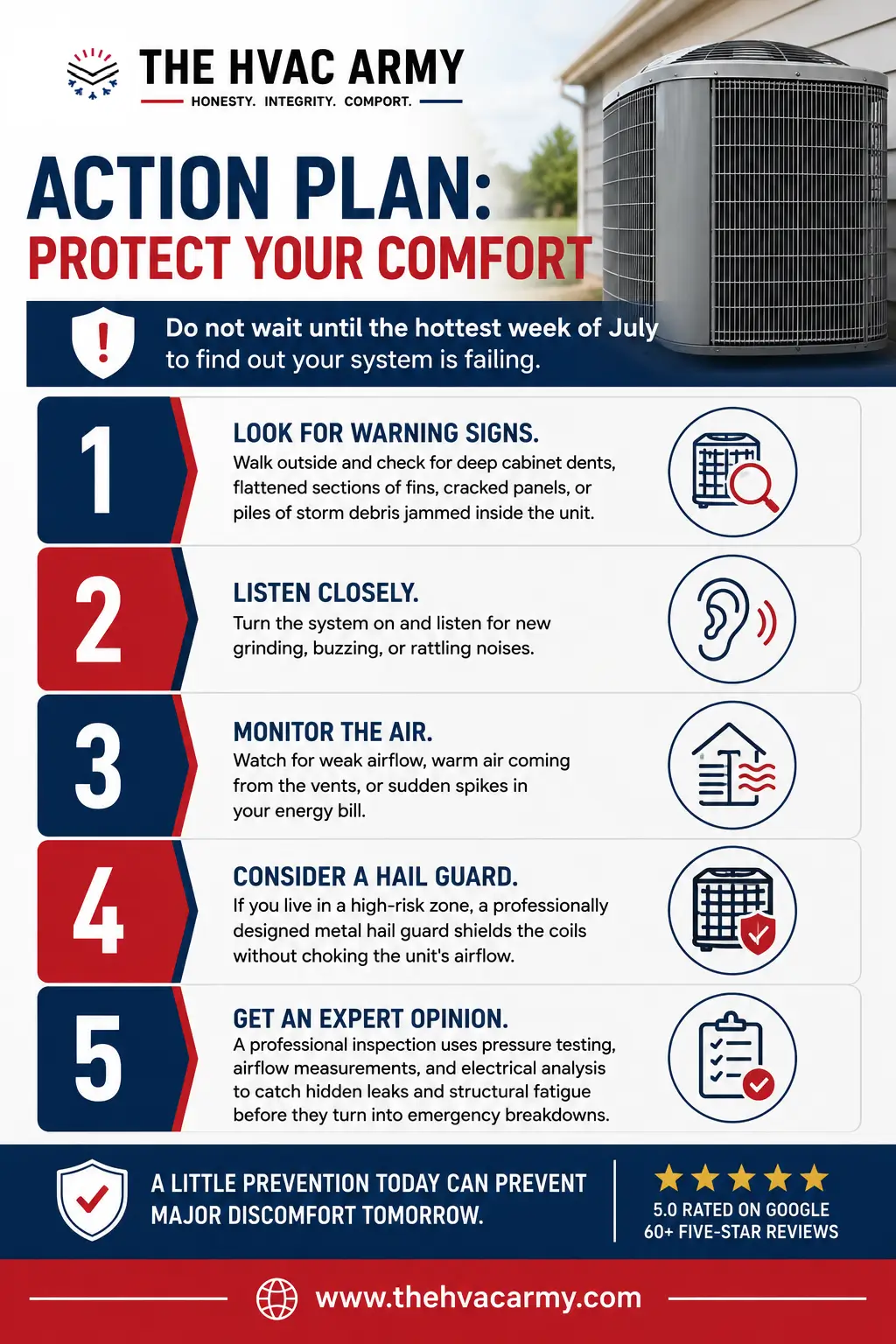
Do not wait until the hottest week of July to find out your system is failing.
- Look for warning signs. Walk outside and check for deep cabinet dents, flattened sections of fins, cracked panels, or piles of storm debris jammed inside the unit.
- Listen closely. Turn the system on and listen for new grinding, buzzing, or rattling noises that weren’t there before the storm.
- Monitor the air. Watch for weak airflow, warm air coming from the vents, or sudden spikes in your energy bill.
- Consider a hail guard. If you live in a high-risk zone, a professionally designed metal hail guard shields the coils without choking the unit’s airflow.
- Get an expert opinion. A professional inspection uses pressure testing, airflow measurements, and electrical analysis to catch hidden leaks and structural fatigue before they turn into emergency breakdowns.
How Preventive Maintenance Helps After Storm Season
Routine HVAC maintenance helps identify storm-related damage early — before major failures occur.
Professional maintenance includes:
- Coil cleaning
- Refrigerant checks
- Electrical testing
- Airflow inspection
- System efficiency evaluation
Scheduling regular maintenance can:
- Extend equipment lifespan
- Improve efficiency
- Reduce emergency repairs
- Catch hidden hail damage early
Should You Install a Hail Guard for Your AC Unit?
For Colorado homeowners, hail guards are often worth considering. A hail guard is a protective metal barrier designed to shield condenser coils while maintaining airflow.
Benefits include:
- Reduced storm damage risk
- Better coil protection
- Lower long-term repair costs
- Improved equipment lifespan
However, improperly designed covers can restrict airflow. Always use professionally approved protection systems installed by a qualified HVAC contractor.
Why Homeowners Choose The HVAC Army
Choosing the right contractor matters just as much as choosing repair or replacement. At The HVAC Army, our team was built around honesty, transparency, and technical expertise. We do not believe in high-pressure sales tactics or manufacturing fake issues to hit a quota.
Homeowners across Aurora and Metro Denver trust us because we provide:
- Accurate post-storm inspections
- Clear repair recommendations
- Honest, transparent pricing
- No unnecessary upselling
- NATE-certified expertise
- Master Mechanical licensed service
- Respectful in-home service practices
We understand Colorado storm damage because we deal with it every season. Whether you need AC repair service after a storm or a full AC replacement in Denver or Aurora, CO, our focus remains the same: helping homeowners make informed decisions that fit their home and budget.
Final Thoughts
Hail damage to an air conditioner should never be ignored, even when the system still appears to be working normally. Minor storm damage can quietly reduce efficiency, raise energy bills, place extra stress on the compressor, create refrigerant leaks, and shorten the overall lifespan of the system.
In some situations, repairs are the most practical and cost-effective option — especially for newer systems with limited damage. In other cases, replacement offers better long-term reliability, stronger energy efficiency, and lower future repair costs.
The best decision ultimately depends on the age of the system, the severity of the hail damage, repair pricing, insurance coverage, and your long-term plans for the home. A professional HVAC inspection helps homeowners fully understand the condition of their system so they can move forward with confidence.
Call (303) 418-3768 today to schedule your inspection or request a free quote.
Our team is here to help you protect your comfort, your investment, and your home.
